
Computational Physics & Dynamical Systems

Model physical and system behavior to compare alternatives, quantify uncertainty and define test conditions.

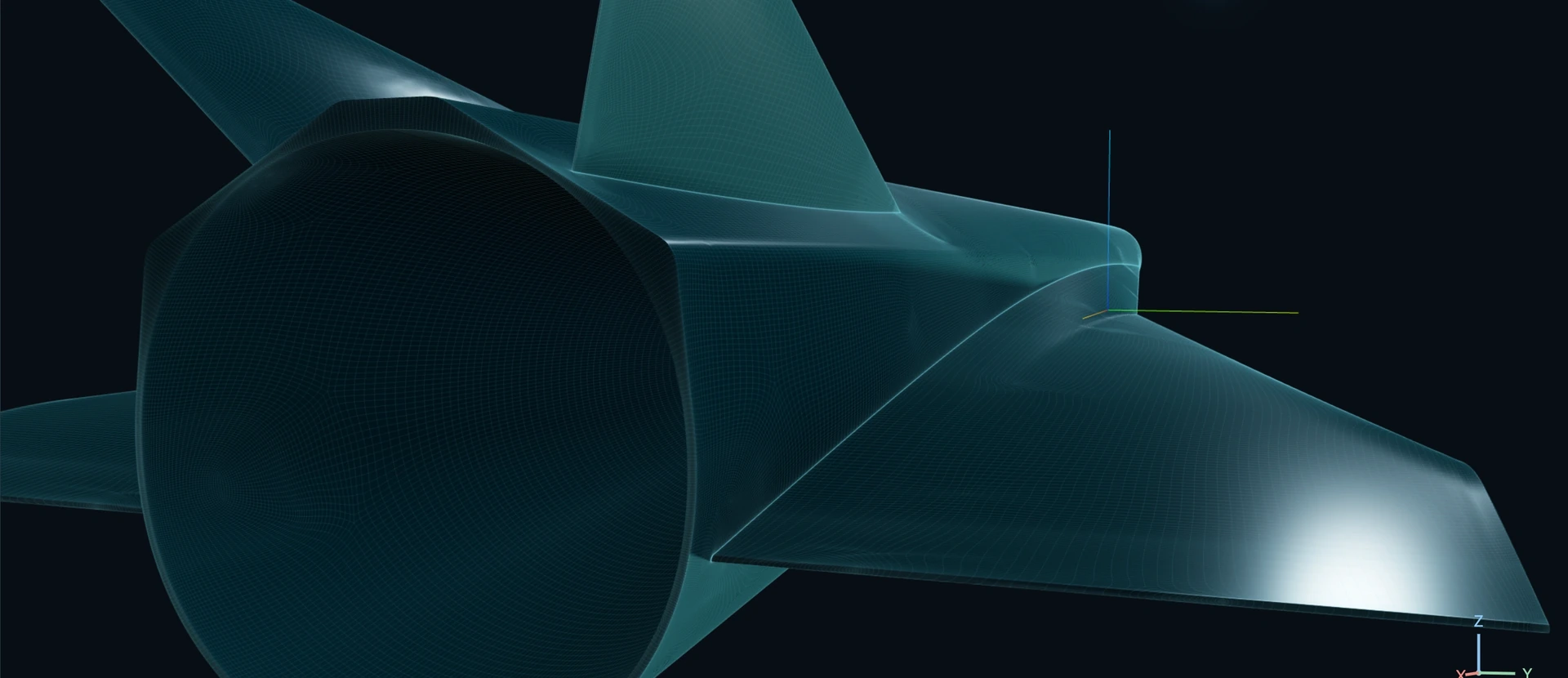
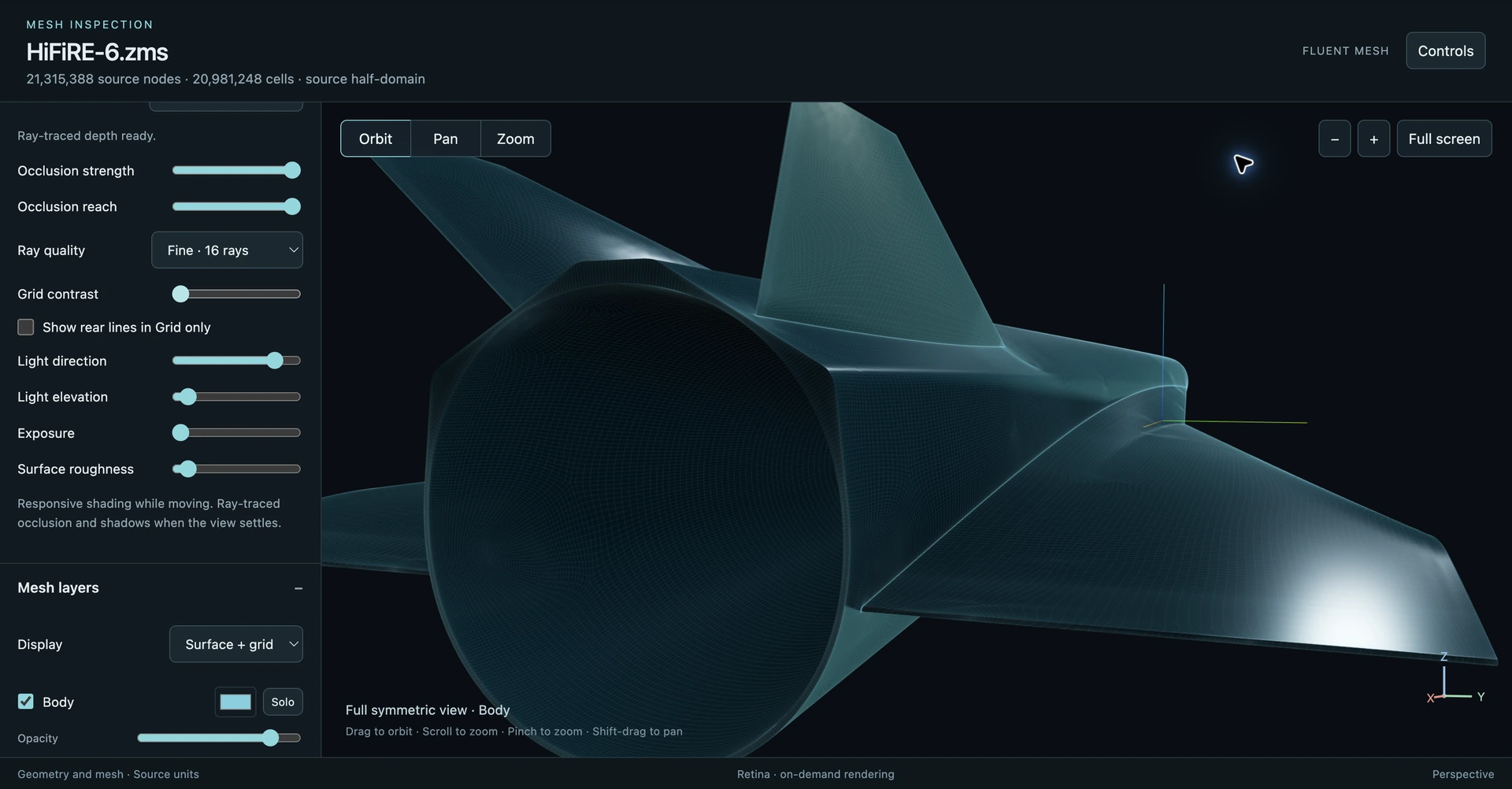
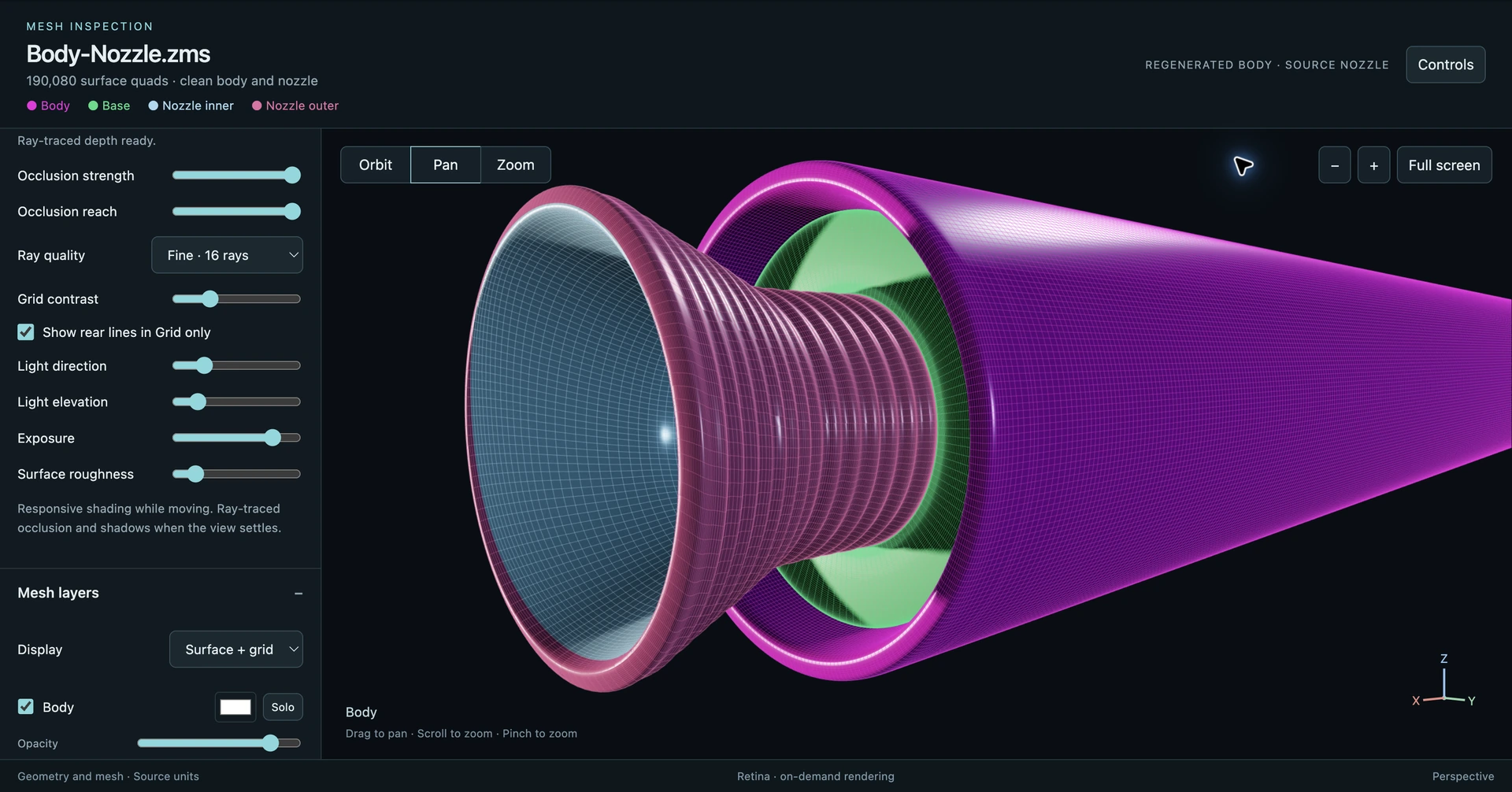
Rear detail of the HiFiRE-6 computational mesh
HiFiRE-6 computational mesh · rear detail.
Mesh inspection views
HiFiRE-6 rear mesh inspection, complete source view
HiFiRE-6 rear mesh inspection.
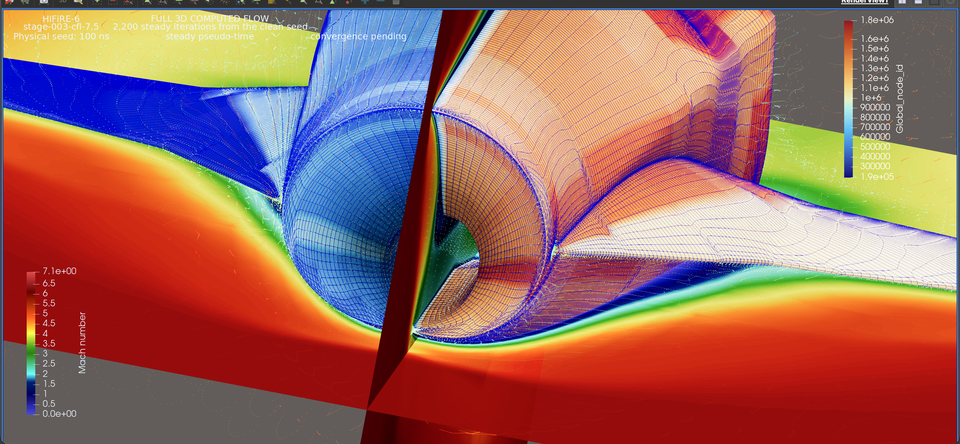
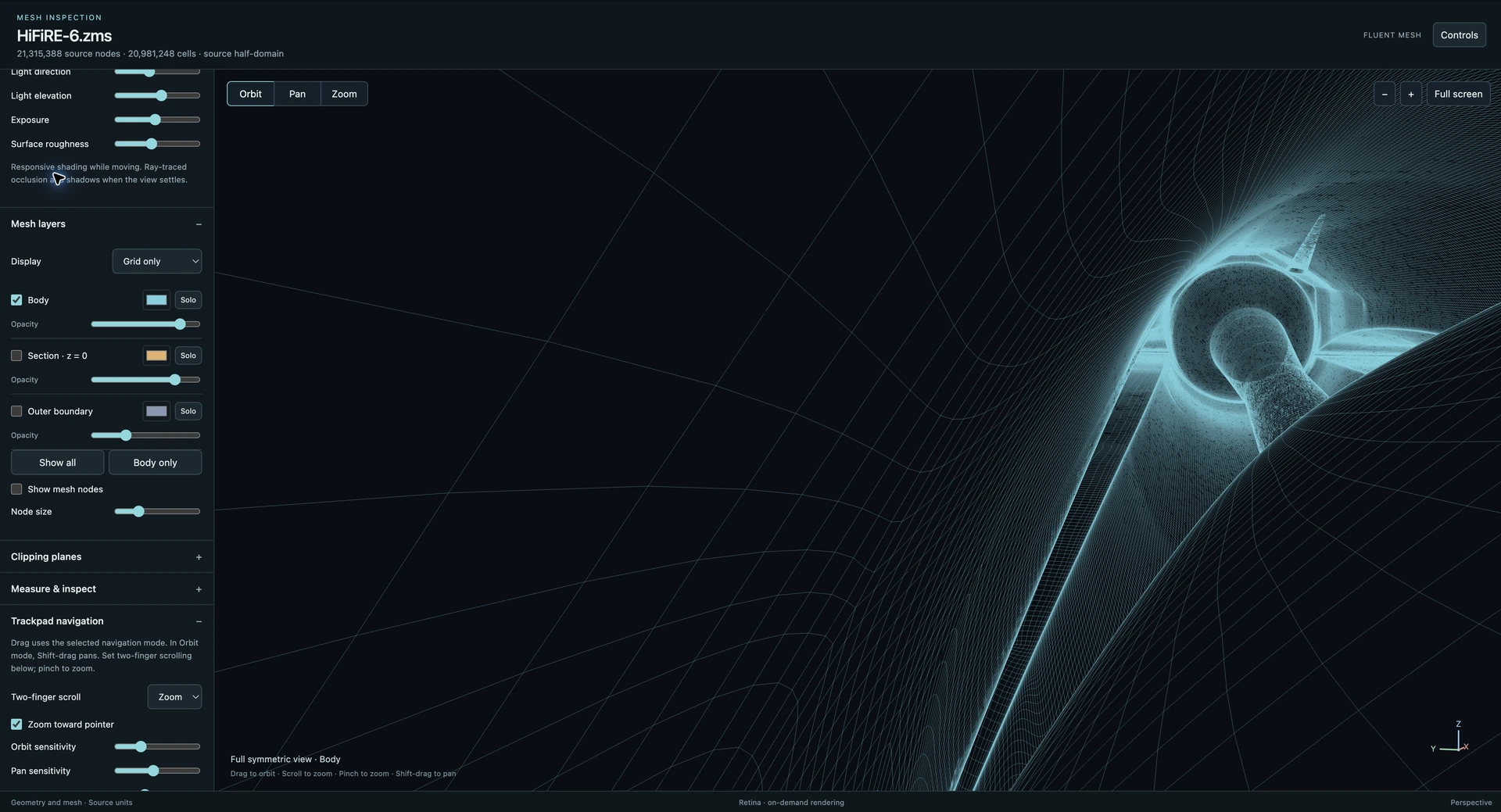
HiFiRE-6 internal mesh inspection, complete source view
HiFiRE-6 internal mesh inspection.
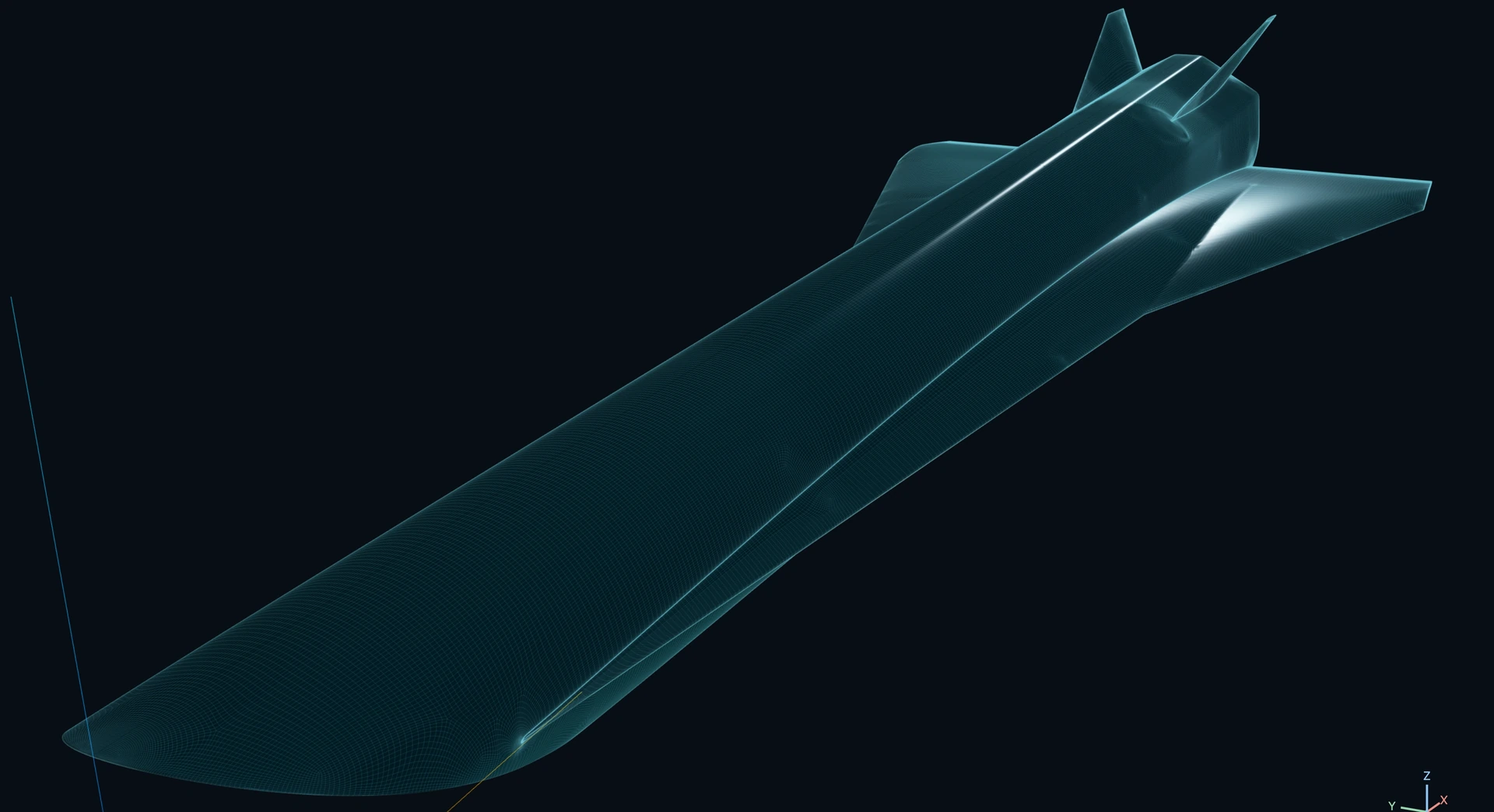
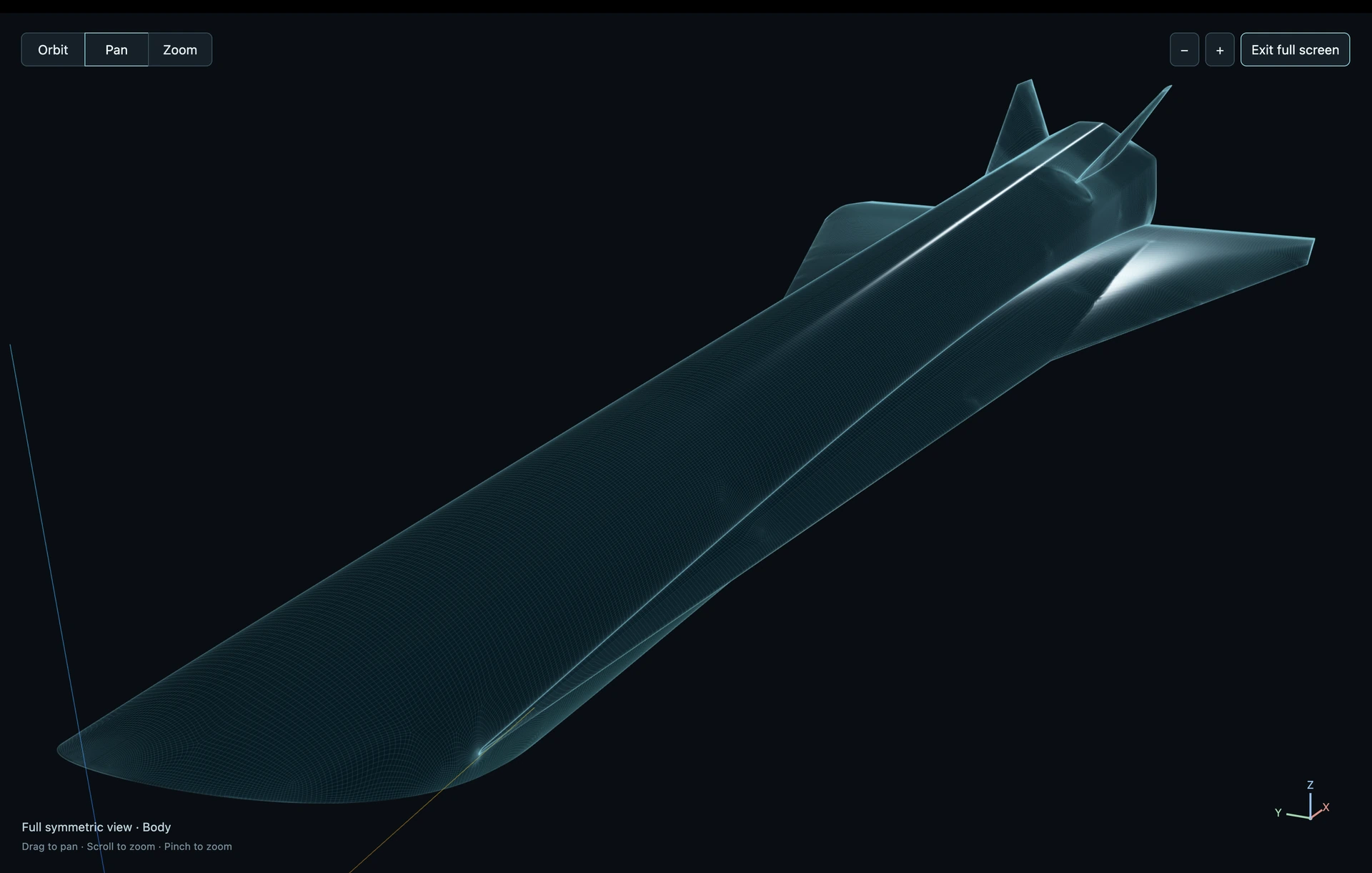
HiFiRE-6 whole-body mesh inspection, complete source view
HiFiRE-6 whole-body mesh inspection.
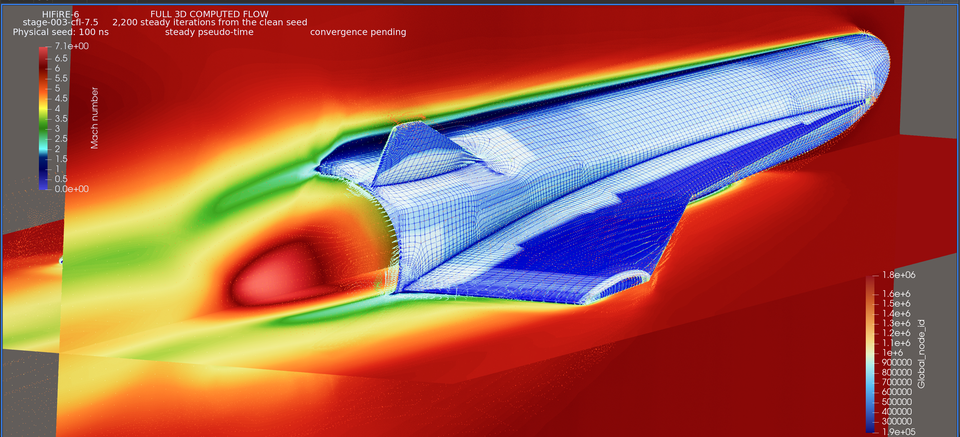
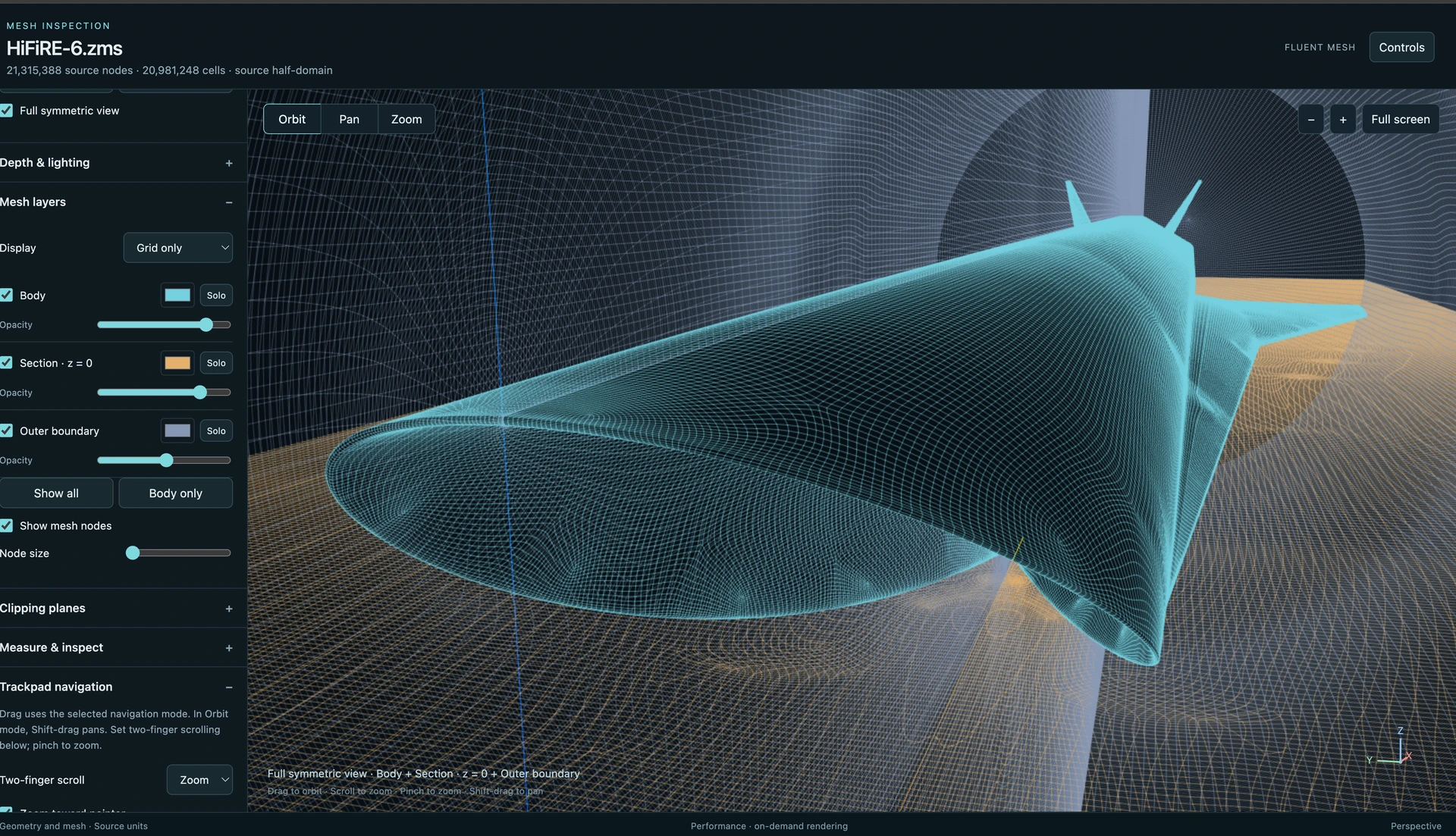
HiFiRE-6 mesh and outer domain
HiFiRE-6 mesh and outer domain.
Body and nozzle surface reconstruction
Body and nozzle surface reconstruction.

Engineering scope

PALLC develops and integrates models spanning orbital and vehicle dynamics, fluid and thermal behavior, reacting and ionizing air, electromagnetic fields, and sensor observations. Discrete-event and stochastic models connect physical behavior to system interactions and mission timing.

Model resolution follows the intended use. Sensitivity and uncertainty analysis identify where detailed computation, additional observations or physical tests will most improve the engineering assessment. Model reduction supports repeated and time-sensitive evaluations, including adaptive digital twins.

Verification, validation and uncertainty quantification connect predictions to their technical basis. ZMS brings computed fields, model states and numerical diagnostics into a shared engineering context; the scientific demonstrations show selected flow, thermochemistry and electromagnetic cases.

COMPUTATION / EVIDENCE / ENGINEERING USE

Inspect the physics behind the field.

ZMS brings computed flow, thermochemistry, ionization and electromagnetic fields together with the numerical evidence behind each saved state. Engineers can select a quantity, replay its saved progression and inspect native-cell values in the same workspace.

Fixed field scales and physical units support comparison. Residual histories, analytic and numerical references, refinement studies and balance checks reveal how each calculation behaves. The case description identifies whether playback follows solver iteration, harmonic phase or physical time.

COMPUTATIONAL SCIENCE / ZMS

Scientific demonstrations.

Computational physics in motion

Four cases connect computed fields to source states, convergence and numerical checks.

Watch demonstration

Re-entry capsule and connected mission

Explore ZMS capsule inspection, orbital observation links and numerical results.

Watch demonstration

Explore PALLC

PALLC demonstration